

How do cardboard balers work?
Cardboard balers compress loose cardboard waste into compact, manageable bales, making storage, handling, and recycling easier. Although different models use different technologies, the basic process is similar. Here’s how it works.
Why compact cardboard waste?
Businesses that regularly handle packaging materials often generate large amounts of cardboard waste. Without proper waste management, this can take up valuable space and create unnecessary handling.
A cardboard baler helps solve this problem by compressing loose cardboard into compact bales that are easier to store, transport, and recycle.
Although machines vary in size, design, and technology, they all share the same basic purpose: reducing cardboard waste volume.
How does the compaction process work?
Although operating procedures vary between models, the basic process involves the following steps:
- Prepare the machine: Ensure the equipment is connected to the appropriate power source and ready for use.
- Load the cardboard: Place loose cardboard into the compression chamber.
- Start compaction: Close the loading door and activate the machine according to its operating instructions.
- Compress the material: The pressing mechanism compresses the cardboard, significantly reducing its volume.
- Repeat the process: Continue loading and compacting until enough material has accumulated to form a bale.
- Secure the Bale: Use suitable banding to tie the compressed cardboard together, following the machine’s instructions.
- Remove and Store: Eject the finished bale using the designated mechanism and store it for recycling.
Important: Only trained and authorised personnel should operate the equipment. Always follow the manufacturer’s operating and safety instructions.
Different types of baling technology
Cardboard balers are available in different sizes and technologies, depending on the volume of waste and the requirements of the business.
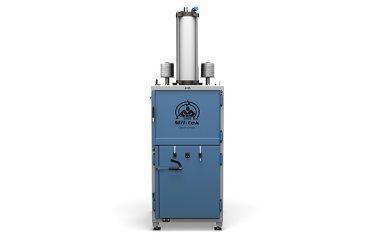
- Pneumatic balers: Use compressed air to compact cardboard and are particularly suitable for smaller waste streams and workplaces with limited space.
- Electric balers: Use electric-powered mechanisms to deliver efficient compaction without hydraulic oil.
- Hydraulic balers: Use hydraulic pressure to handle larger volumes of cardboard, often in industrial and high-capacity applications.
Although these technologies operate differently, they all compress loose cardboard into dense, manageable bales for recycling.
Safe and efficient operation
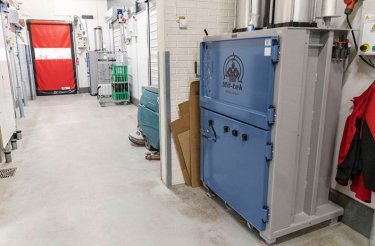
Proper training is essential when operating any baling equipment. Operators should understand the machine’s controls, safety features, and correct procedures for loading, compacting, and removing finished bales.
Always follow the manufacturer’s instructions and ensure that safety guards and mechanisms are functioning correctly before use.
Have questions? We’re here to help!
Discover how Mil-tek New Zealand can help your business simplify cardboard waste handling and recycling.
Contact us for advice and solutions.